

The Excitement, the Concerns, and the Waymo Debut
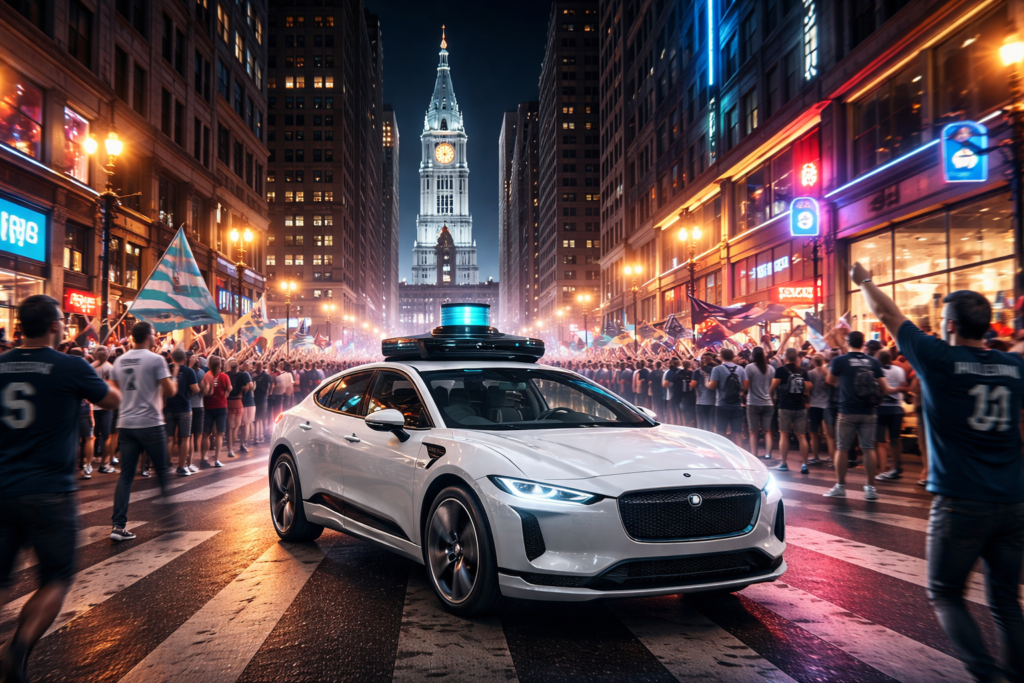
Autonomous vehicles officially hit the streets of Philadelphia this morning, and the timing could not be louder. As playoff energy surges across Center City, Waymo’s sleek electric cars were spotted cruising Market Street during their first supervised test drives in the city.
Outfitted with advanced sensors and spinning lidar units, the vehicles immediately caught the attention of fans already operating at playoff volume. For now, trained safety specialists are seated behind the wheel, but fully driverless rides are coming soon. And in a city known for strong opinions and stronger reactions, the conversation is already moving fast.
Why Driverless Cars Could Be a Playoff Win
Playoff games turn Philly into a transportation pressure cooker. Crowds flood stadiums, bars, watch parties, and transit hubs all at once. Demand for rideshare services spikes sharply, often resulting in long wait times and surge pricing that frustrates riders and drivers alike.
Autonomous fleets like Waymo’s introduce a different model. With consistent availability and algorithmic routing, driverless vehicles can help absorb demand during peak hours without fatigue or distraction. By removing tired, impaired, or emotionally charged drivers from the equation, these systems aim to improve safety while keeping pricing more predictable.
Beyond game nights, autonomous vehicles also collect large volumes of traffic data. Over time, that data can be used to optimize routing, reduce congestion, and support smarter city planning. In theory, fewer bottlenecks and smoother traffic flow benefit everyone on the road.
Why Philly Is Skeptical
Of course, this is Philly, and not everyone is cheering.
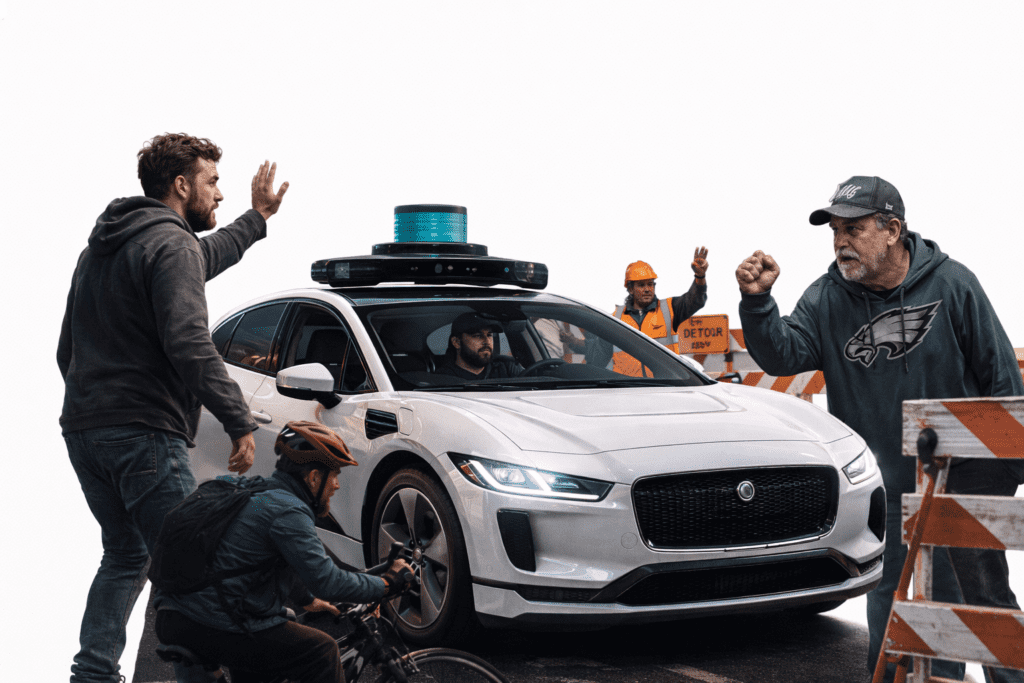
Many residents question whether autonomous systems can handle the city’s uniquely unpredictable street behavior. Jaywalkers stepping out mid block. Bikes weaving between lanes. Sudden construction detours. And the kind of aggressive driving that only intensifies during a playoff run.
There are also economic concerns. Local rideshare drivers often rely on playoff season for extra income, and the arrival of autonomous vehicles raises real questions about job displacement. For some, the issue is not technology but timing and impact.
And for others, it is simply emotional. The idea of computer driven cars navigating Broad Street during a championship push feels uncomfortable, even if the data suggests otherwise.
The Data Behind the Debate
Comparable Crash Rates
-
Human Driven Vehicles
Approximately 4.1 crashes per 1,000,000 miles, based on nationwide roadway data published by safety -
Rideshare Vehicles During Peak Events
Approximately 5.6 crashes per 1,000,000 miles, reflecting increased congestion, fatigue, and distraction during high demand periods, summarized in urban mobility studies by research -
Autonomous Vehicles in Supervised Testing
Approximately 1.8 crashes per 1,000,000 miles, derived from publicly disclosed autonomous collision and disengagement filings compiled in state level performance reports -
Autonomous Vehicles in Fully Driverless Operation
Approximately 0.9 crashes per 1,000,000 miles, based on real world deployment data and safety disclosures published by autonomy
How to Read This Data
As traffic density and emotional pressure increase, crash rates for human driven vehicles rise sharply. Autonomous systems do not experience fatigue, distraction, or emotional escalation, resulting in lower and more consistent crash rates per mile traveled, even in dense urban environments.
This is why cities evaluating autonomous transportation focus on per mile performance, not isolated incidents. Scale matters, especially during high intensity moments like playoff season.
The Bottom Line
Driverless cars are not new. They have been operating in West Coast cities for years. But Philly is different. Older streets. Faster reactions. Louder opinions. And a playoff atmosphere that turns every rollout into a stress test.
Waymo’s arrival signals the future of transportation, but it also raises valid questions about safety, jobs, and city readiness. Whether these vehicles become a playoff MVP or ride the bench will depend on how well they handle Philly on its loudest days.
One thing is certain. This city will not be shy about letting them know how they are doing.