

Why 70% of University Website Visitors Never Enroll and How AI Sales Agents Fix It
Universities are facing a quiet crisis.
70% of students who visit a university website never enroll.
They are not all unqualified.
They are not all price shopping.
Most of them simply fall through a digital gap between curiosity and commitment.
On the Pivoting to WEB3 podcast, Jason Sherman, founder of Vengo AI and Campus Pixel, broke down why this happens and how AI Sales Agents are becoming the missing layer between interest and action.
This is not just a higher education problem. It is an enterprise wide problem. And it is exactly where AI is making its biggest impact.
The Real Reason University Enrollment Is Dropping
Many universities are experiencing enrollment declines of 40% to 50%. While leadership often points to demographics or economic pressures, there is another factor hiding in plain sight.
The website experience.
A prospective student visits a university site with important, emotional, and time sensitive questions.
Can I afford this?
Is this program right for my career path?
What are the admissions requirements?
What should I do next?
Instead of getting guidance, they are left to navigate static pages, long forms, and delayed follow up emails. By the time someone responds, momentum is gone.
Interest fades. Applications never start. Enrollment never happens.
This is where Campus Pixel and Vengo AI change the equation.
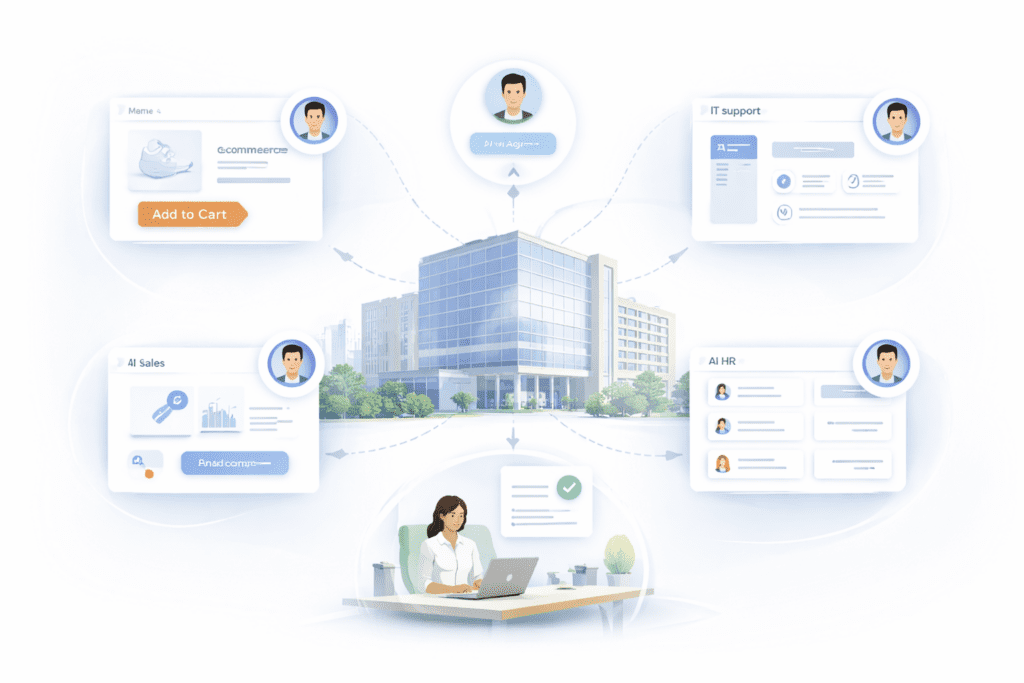
AI Sales Agents act as real time admissions advisors on university websites. They answer questions instantly, guide students to relevant programs, and help them take the next step while motivation is still high.
This is not passive information. It is active conversion support.
AI Is Becoming the Solution to Enterprise Bottlenecks
What is happening in university admissions is also happening across large organizations.
Leads sit untouched in inboxes.
Customer questions wait hours or days for replies.
Internal requests stall because the right person is busy.
Jason describes AI as a bottleneck eliminator.
AI Sales Agents handle high volume front line interactions the moment they happen. They qualify, guide, and route in real time. Humans are still essential, but now they step in at the right moment instead of drowning in repetitive requests.
This is why AI adoption is starting to resemble the adoption of electricity or automobiles. At first it feels optional. Then it becomes infrastructure.
Organizations that respond instantly win. Organizations that delay lose attention.
The Growing Importance of Data Ownership
As AI becomes more embedded in operations, data control becomes a critical issue.
Jason emphasized the need for proprietary AI infrastructure that protects client data instead of sending everything into large centralized systems. For universities and enterprises, this is about trust as much as technology.
Decentralized storage solutions like SC Prime were discussed as alternatives to traditional cloud providers. These networks offer stronger resilience, lower costs, and reduced dependence on single point providers.
As AI Sales Agents become part of customer and student interactions, pairing intelligence with secure infrastructure becomes a long term strategic advantage.
Are Large Language Models Running Out of Data
Another key topic was the future of AI training data.
Early AI systems learned from vast amounts of public internet content. That pool is shrinking as platforms restrict access and original data becomes more valuable. This is driving interest in proprietary datasets and domain specific AI systems.
For organizations, this means your own data is now one of your most valuable assets. AI systems trained around your processes, customers, and knowledge create a competitive edge that generic systems cannot match.
Where AI Helps and Where Humans Still Lead
Jason also spoke from his background in filmmaking.
AI is incredibly effective in pre production tasks such as research, planning, organization, and storyboarding. It accelerates preparation and reduces friction. But storytelling itself still requires a human in the loop.
Emotion, lived experience, and creative intuition cannot be fully automated.
The same balance applies in business. AI supports, accelerates, and informs. Humans lead with judgment, empathy, and vision.
The future is not AI replacing people. It is AI working alongside people, each doing what they do best.
The Big Takeaway
Across universities and enterprises, the pattern is clear.
Attention is high.
Interest is real.
But systems break before action happens.
AI Sales Agents fix that break.
They appear at the moment questions arise, remove friction, and keep momentum alive. For universities, this means more applications and higher enrollment. For enterprises, it means fewer bottlenecks and faster growth.
AI is no longer an experiment. It is becoming the connective layer between curiosity and conversion.
Organizations that build this layer now will define the next era of digital experience.
Watch the full conversation with Jason Sherman on the Pivoting to WEB3 podcast to hear more about AI, infrastructure, and the future of human and machine collaboration.